
'At the first sign of real trouble, that money will move. There will be a run.'
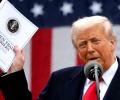
United States President Donald Trump has backed a sanctions bill that could impose 500 per cent tariffs on countries buying Russian oil, giving the White House leverage against countries like China and India to stop them from purchasing cheap oil from Moscow.

Indian private sector and State-run refiners continued to receive crude oil from Russian suppliers even after November 21 -- the winding-down date for US sanctions on supplies from leading Russian oil producers imposed in October -- as new intermediaries sprung up in West Asia to sell the oil, according to senior refining sources and ship tracking data.

Notwithstanding the economic complementarities and the host of agreements for deepening economic relation on a host of areas, both sides share common viewpoints on the foreign policy domain and seek common grounds to serve as a counterweight to China, notes Dr Rajaram Panda.
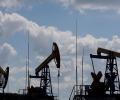
US sanctions against two of Russia's largest oil companies are expected to impact Reliance Industries' crude imports from Russia, while state-run refiners may continue purchases through intermediary traders for now.
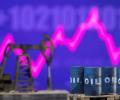
India's crude oil imports from Russia saw a marginal decline in September, but continued to account for over one-third of the country's total oil purchases, despite US pressure to curb the trade over concerns that it supports Moscow's war effort in Ukraine. India's crude imports in September were around 4.7 million barrels per day, up 220,000 bpd month-on-month and flat year-on-year.

The Indian rupee is highly vulnerable among Asian currencies, with Barclays and MUFG warning of a potential depreciation towards 100/$ if the West Asia conflict persists, driven by widening current account deficits and elevated crude oil prices.

'When we start describing somebody as an enemy that is the start of politics and emotion after which no business can take place.' 'We need to get out of this, allow Indian businessmen to do business with China.'

India, China and other countries that have been cutting their oil imports from Iran have reached a point where it is "very very difficult" to reduce any further without seriously impacting their economies, US Secretary of State John Kerry has told lawmakers.

US President Donald Trump received a red carpet welcome in Beijing for talks with Chinese President Xi Jinping on trade, the Iran war, and other key issues. The visit underscores the importance both nations place on their relationship amid ongoing tensions.
Chinese import tariffs have unwittingly come to India's assistance to help boost imports of US liquefied petroleum gas (LPG) at rates cheaper than what it pays for supplies from West Asia, according to industry sources and shipping data.
'Indian refiners can operate without Russian crude from a technical standpoint, but the shift would involve major economic and strategic trade-offs'

If India caves in to US pressure as Trump hopes it will, he will further try to blackmail it into submission, points out Ramesh Menon.

India should not stay on the margins of this initiative. There should be a serious debate about what would be in India's best interests asserts former foreign secretary Shyam Saran.

US President Donald Trump is set to visit China for talks with President Xi Jinping on trade, global issues, and the Gulf war. The visit aims to address trade frictions and other key issues, with high expectations for progress.

US President Donald Trump and Chinese President Xi Jinping met in Beijing to discuss a range of issues, including trade frictions and the war in Iran.

Chinese President Xi Jinping has called for the Strait of Hormuz to remain open for normal passage of ships, describing it as an 'international waterway' amid rising tensions between the US and Iran.

Hydrogen fuel cell technology generates electricity through a chemical reaction using hydrogen, with water vapour as the only emission, making it a cleaner alternative to conventional fossil fuel-based traction systems.

India's EV ecosystem is growing, but remains too underdeveloped to cushion a major oil supply shock.
India, the world's third largest oil consuming and importing nation, bought crude oil worth 49 billion euros from Russia in the third year of Moscow's invasion of Ukraine, a global think tank said. India, which has traditionally sourced its oil from the Middle East, began importing a large volume of oil from Russia soon after the invasion of Ukraine in February 2022.
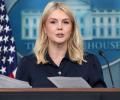
The US has temporarily permitted India to accept Russian oil already on ships to ensure energy supplies amid the conflict with Iran. This short-term measure is not expected to significantly benefit Russia financially.

'Even if the war ends tomorrow, which is unlikely, and we go back to the pre-war status quo, the world will still need some time to get over the sudden shock of oil price increases.'

The closure of the Strait of Hormuz has disrupted some 20 per cent of the global flows but even if it opens, damages to production facilities in the region will take time to repair, points out Sunita Narain.
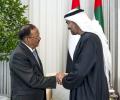
India is the only significant power that all parties trust, or at least do not distrust, notes former defence secretary Ajay Kumar.

India generates 9.3 million tonnes of plastic waste annually, nearly 20 per cent of the world's total.

Delhi must now purge the delusional hopes of being a 'counterweight' to China in the US calculus, argues Ambassador M K Bhadrakumar.

China has reacted positively to Russian President Vladimir Putin's visit to India, emphasizing the importance of trilateral ties between China, Russia, and India for regional and global peace and stability.

India's imports from Iran rose to 250,200 barrels per day
Two days after Russian President Vladimir Putin concluded his visit to India, during which he assured that Moscow would remain a reliable energy supplier, the Kremlin on Monday said that India, as a sovereign nation, is free to buy oil from sources it deems beneficial. It expressed confidence that New Delhi will continue to prioritise its economic interests.
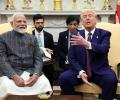
His assertion came after Trump claimed that his "friend" PM Modi has assured him that India would stop purchasing oil from Russia, a move he described as a big step toward increasing pressure on Moscow over its invasion of Ukraine.

A US lawmaker has criticized President Donald Trump's tariff policy on India for purchasing Russian oil, urging him to reverse it immediately.

The latest flashpoint in West Asia has derailed India's preliminary plans to resume crude oil imports from Iran, officials said. In January, officials of the Ministry of Petroleum and Natural Gas had told Business Standard that the government had been studying proposals for the same, given that India was trying to expand sources of imports. "We are always monitoring the situation when it comes to crude flows.

Sanctioning Russian oil would have led to a sharp surge in oil prices to above $80 per barrel levels, which would impact pump prices in the US ahead of midterm elections next year.

Iran was the chance to arrange a concert of nations, to actually be a Vishwaguru. Instead, we are watching from the sidelines as Pakistan, the same country that is apparently still at war with Afghanistan, hosts talks between US-Israel and Iran. The irony is hard to miss, points out Amberish K Diwanji.

'Even last year, when India bought gold, the physical quantity was much less than the previous years.'
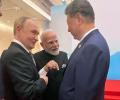
The relations between New Delhi and Washington are on a downturn after Trump doubled tariffs on Indian goods to a whopping 50 per cent, including a 25 per cent additional duties for India's purchase of Russian crude oil.

Saudi Arabia's steep cut in LPG benchmark prices has pushed India's household LPG underrecoveries to their lowest level in over two years, slashing oil companies' losses from Rs 200-250 per cylinder last year to about Rs 20-40 now.
The government has no say in where the country's refiners source oil from because these are commercial transactions.

'Markets never fully lose hope. But an important shift could come if the Strait remains closed -- moving from high prices to no prices.'

Trump also called upon China, France, and Japan, among others, to send ships to the Strait of Hormuz.
